


Most of us walked into our first meeting with nothing to be thankful for. That is the honest truth. We were tired, ashamed, and sure that life had already given us everything it was going to give. Gratitude felt like a word for other people.
And yet, months later, many of us found ourselves saying “thank you” for the smallest things. A quiet morning. A phone call from a family member who had stopped calling. A full night of sleep. Somewhere along the way, gratitude stopped being a word and became a way of seeing.
Why Gratitude Feels So Hard at the Start
In active addiction, the mind works like a filter. It keeps what is painful and throws away what is good. We remembered every argument but forgot the people who stayed. We counted what we had lost and never what was left.
Early recovery does not fix this overnight. Cravings are loud. Guilt is heavier than it looks from the outside. Telling a newcomer to “just be grateful” can sound almost insulting.
So let us be clear: gratitude is not a feeling you wait for. It is a practice you begin, even when you do not feel it yet. Think of it like a muscle that has not been used for years. It will be weak at first. That is normal.
What Gratitude Actually Does for the Mind
Gratitude does not erase problems. What it does is change where your attention rests.
When an addict wakes up and the first thought is what do I not have today?” the day starts with a loss. When the first thought is “I am clean today,” the day starts with a win, however small. That single shift matters more than it seems.
Here is what regular gratitude can build over time:
- Calmer thinking. It is hard to stay in panic and thankfulness at the same moment.
- Less self-pity. Resentment loses its grip when we remember how far we have come.
- Stronger relationships. People feel it when we appreciate them, and trust grows back slowly.
- Better resilience. A hard day feels less like the end of the road.
None of this is magic. It is simply what happens when the mind is trained to notice what is working.
Gratitude and the Fellowship
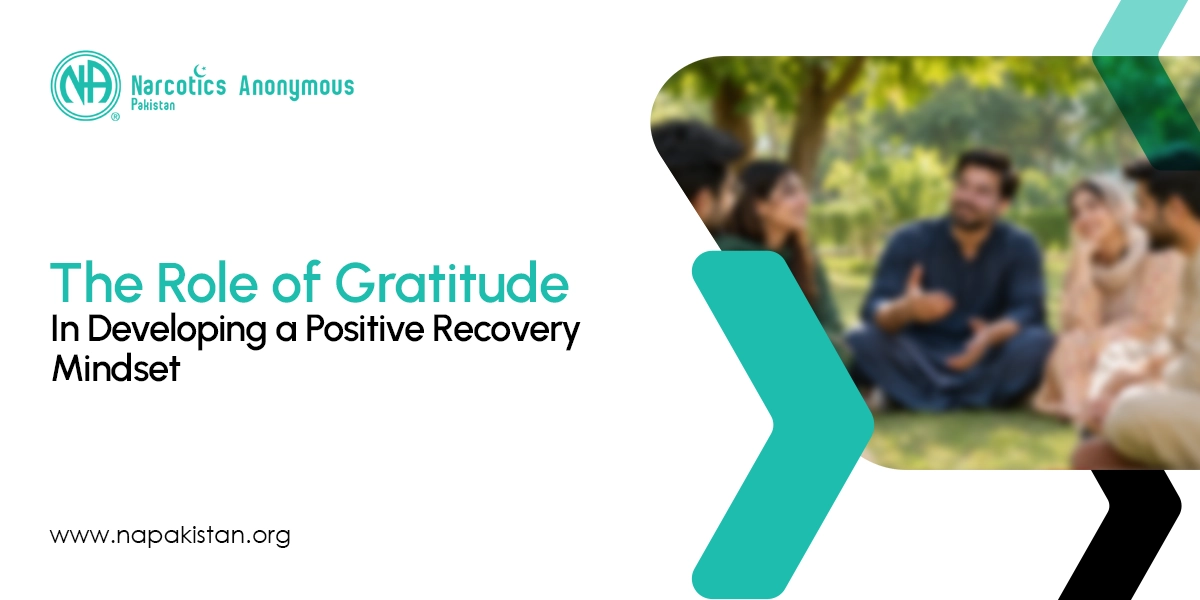
One of the first places gratitude shows up is in the rooms. We sit in a circle and hear someone say, I have thirty days. We do not clap because it is polite. We clap because we know exactly what those thirty days cost.
Meetings teach gratitude without lecturing. We hear stories from people who were once in the same dark place, and we begin to realize that someone made room for us when we had no right to expect it. A sponsor who answers a late-night call. A member who shares a lift home. A stranger who says, Keep coming back.
These are not small things. For many of us, they were the first kindness we had accepted in years.
At NA PAK the Twelve Steps, we carry this spirit too. Making amends, taking inventory, and helping another addict all ask us to look outward. Gratitude grows naturally when we stop living only inside our own head.
Simple Ways to Practice Gratitude Daily
You do not need a perfect routine. You only need something you will actually do. Here are a few that have worked for many in recovery:
- Write three things each night. Keep it plain. “I got through the day clean.” “My mother smiled at dinner.” “Tea was good today.” Small is fine.
- Say it out loud in meetings. When you share what you are thankful for, you hear it yourself. Others hear it too, and it may be exactly what a newcomer needed.
- Thank one person a day. A short message to a sponsor, a friend, or a family member is enough.
- Start your morning with your clean time. Before you check your phone, remember the day count. It sets the tone.
- Notice the ordinary. Food on the table. A roof. Clean clothes. Health slowly coming back. Ordinary things are the ones we used to lose first.
If a day feels too dark for any of this, do just one. One is enough to keep the habit alive.
When Gratitude Feels Fake
Some days you will sit with your notebook and feel nothing. That does not mean you are doing it wrong.
Recovery is not a straight road. There will be days of doubt, anger, or plain boredom. On those days, do not force a happy feeling. Just write down what is true. “I did not use today.” That sentence alone is worth being grateful for.
It also helps to talk. Call your sponsor. Tell the group you are struggling to feel thankful. Honesty is part of recovery, and nobody in the rooms will judge you for it. Most of them have been there themselves.
A Positive Mindset Is Built, Not Found
People often imagine a “positive mindset” as something cheerful and effortless. In recovery, it looks different. It looks like choosing to stay clean after a bad phone call. It looks like going to a meeting when you would rather stay in bed. It looks like seeing a setback and saying, “I will start again from here, not from zero.”
Gratitude is the foundation under all of that. It reminds us that recovery is not a punishment. It is a second chance, and we did not earn it alone.
Over time, the question changes. We stop asking, Why did this happen to me? and begin asking, “What can I do with the life I have been given? That is a very different place to live from.
A Final Word
If you are new, struggling, or simply having a heavy week, start small. Be thankful for today. You do not have to feel it perfectly. You only have to practice it honestly.
One day at a time, the practice becomes a habit. The habit becomes a mindset. And the mindset, quietly, becomes a better life.
Gratitude did not cure us. But it gave us a reason to stay, and for many of us, that was everything. If you or someone you love is struggling with addiction, you do not have to face it alone. Reach out to a Narcotics Anonymous meeting in your area. Someone there will understand.